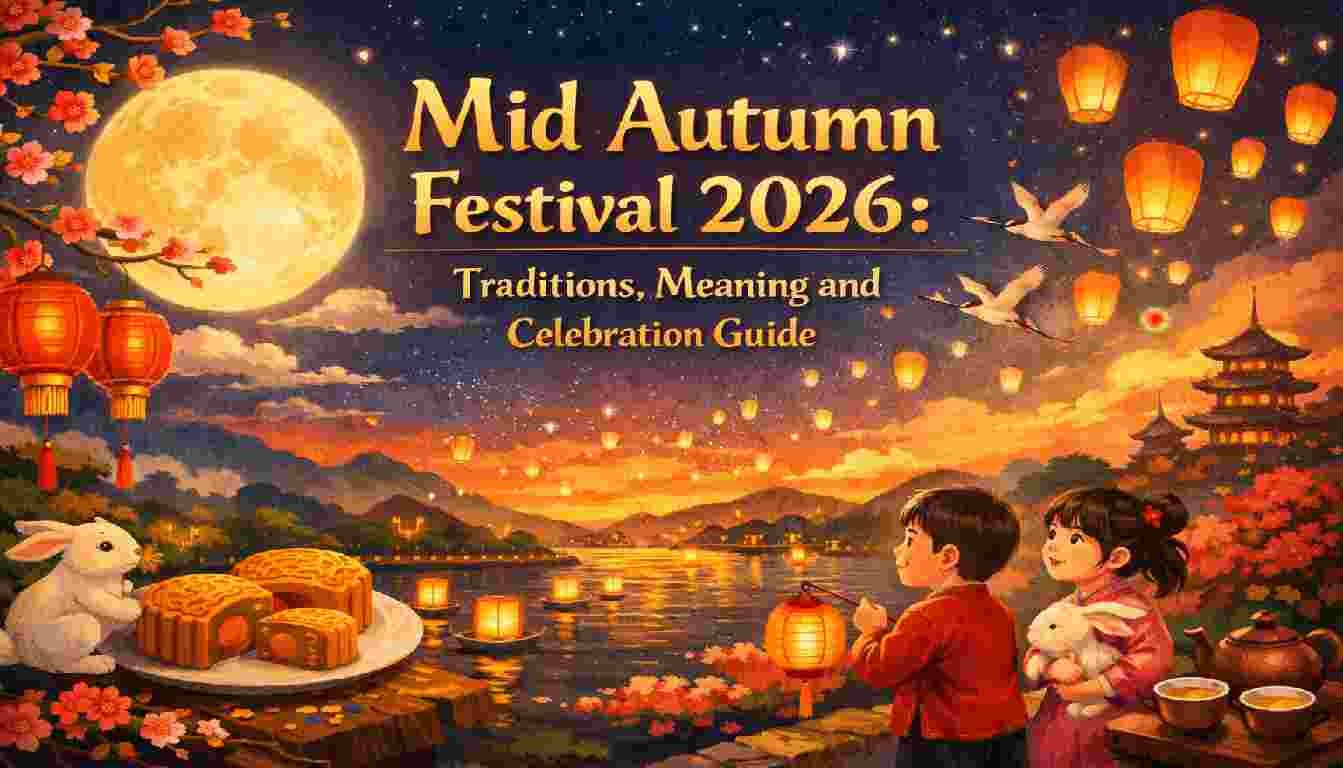
Mid Autumn Festival 2026: Traditions, Meaning and Celebration Guide
The Mid Autumn Festival 2026 is more than just a date on the lunar calendar—it is a celebration of family reunion, gratitude, culture, and centuries-old tradition. Celebrated on the 15th day of the 8th month of the lunar calendar, this festival falls during a time when the moon is believed to be at its fullest and brightest. For millions of people across Asia and around the world, it symbolizes unity, harvest, and hope.
In 2026, families, communities, and cultural organizations will once again gather under the glowing full moon to share mooncakes, light lanterns, and honor traditions that have been passed down through generations. Whether you are experiencing it for the first time or continuing a family tradition, this guide will help you understand the meaning, customs, and ways to celebrate the Mid Autumn Festival 2026.
When Is Mid Autumn Festival 2026?
Mid Autumn Festival 2026 will be celebrated on September 25, 2026 (based on the lunar calendar). Unlike fixed-date holidays, this festival follows the lunar cycle, which is why the exact date changes each year. The 15th day of the 8th lunar month marks the time when the moon is at its roundest and brightest — a powerful symbol of completeness and reunion.
The Meaning Behind Mid Autumn Festival
At its heart, the Mid Autumn Festival represents:
- Family reunion
- Gratitude for harvest
- Harmony and unity
- Hope and prosperity
The round shape of the full moon symbolizes completeness. In many cultures, a round moon reflects family togetherness — no matter how far apart loved ones may be. Even today, people who cannot travel home often pause to admire the moon and think of their families.
It is a celebration deeply rooted in emotion. It reminds people to slow down, reconnect, and appreciate the blessings in their lives.
The Historical Origins of Mid Autumn Festival
The festival has a history of over 3,000 years. It began as a harvest celebration during ancient agricultural societies. Farmers would give thanks for a successful crop season and pray for future prosperity.
Over time, the festival became closely associated with moon worship. Ancient emperors would perform rituals to honor the moon, believing it influenced harvests and human destiny.
As centuries passed, the festival evolved into a cultural and family-centered event. Traditions, legends, and foods were added, shaping the festival into what we know today.
The Legend of Chang’e and the Moon
One of the most famous stories connected to the Mid Autumn Festival is the legend of Chang’e.
According to folklore, there were once ten suns in the sky, causing great suffering on Earth. A heroic archer shot down nine of them, saving humanity. As a reward, he received an elixir of immortality. However, his wife Chang’e drank the elixir and ascended to the moon, where she now resides.
During the Mid Autumn Festival, families offer mooncakes and fruits while gazing at the moon, remembering this beautiful and bittersweet story.
This legend adds emotional depth and storytelling tradition to the festival, especially for children learning about cultural heritage.
Traditional Customs of Mid Autumn Festival 2026
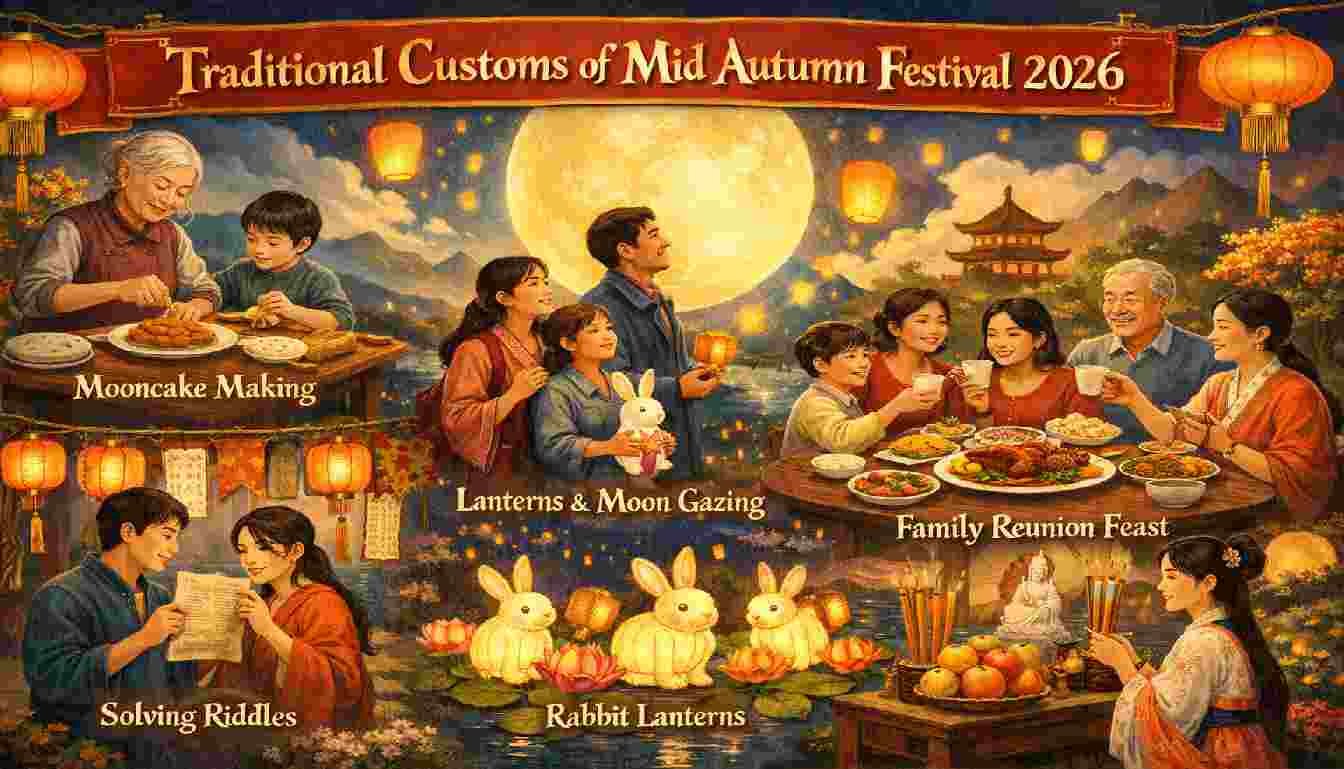
- Moon Gazing: Families gather outdoors to admire the full moon. It is believed that the moon shines brightest on this night, symbolizing unity and completeness.
- Eating Mooncakes: Mooncakes are the signature food of the festival. These round pastries represent reunion and harmony. They are usually shared among family members.
- Lighting Lanterns: Children and adults carry colorful lanterns in various shapes and designs. Lantern displays often brighten streets and parks, creating a magical atmosphere.
- Family Dinners: A reunion dinner is an important part of the celebration. Similar to other major cultural holidays, family members travel long distances to be together.
- Offering Fruits: Fruits like pomelos, grapes, and apples are displayed as offerings. Their round shapes symbolize completeness and blessings.
Traditional Foods of Mid Autumn Festival
Food plays a central role in this festival. Here is a table summarizing common traditional foods and their meanings:
| Food Item | Symbolic Meaning | Description |
| Mooncakes | Reunion and unity | Round pastries filled with lotus seed paste, red bean, or salted egg yolk |
| Pomelo | Blessings and protection | Large citrus fruit often displayed during the festival |
| Taro | Good fortune | A root vegetable commonly prepared in savory dishes |
| Tea | Harmony and respect | Served alongside mooncakes to balance sweetness |
| Grapes | Abundance | Represent prosperity and fertility |
Mooncakes have evolved over time. Modern variations include chocolate, ice cream, and even coffee-flavored fillings, appealing to younger generations while maintaining tradition.
How Different Countries Celebrate Mid Autumn Festival
Although the core meaning remains the same, celebrations vary by region. In China, large public lantern displays and cultural performances are common. In Vietnam, children participate in lantern parades and lion dances. In Korea, a similar harvest festival is celebrated with traditional foods and ancestral rituals.
In Malaysia and Singapore, shopping malls and public spaces host lantern exhibitions and community gatherings. These variations show how the festival adapts to local cultures while preserving its core values.
Also Read: Lovers and Friends Festival: Ultimate R&B & Hip-Hop Guide 2026
Modern Ways to Celebrate Mid Autumn Festival 2026
Tradition continues, but modern lifestyles have added new elements.
Virtual Family Reunions
For families living abroad, video calls have become part of the celebration. Even when separated by distance, the symbolic act of watching the moon together keeps the tradition alive.
Social Media Sharing
People share photos of mooncakes, lanterns, and moonlit skies online, spreading cultural awareness globally.
Community Events
Cultural organizations often host performances, workshops, and storytelling sessions to educate younger generations.
Creative Mooncakes
Bakeries now experiment with healthier options and unique flavors to attract modern consumers.
Why Mid Autumn Festival Still Matters Today
In a fast-paced world, festivals like this remind us of simple yet powerful values: family, gratitude, and unity.
It provides:
- A moment to pause
- A reason to reconnect
- A chance to honor heritage
- An opportunity to teach children about culture
Even people outside traditional celebrating regions have begun embracing it as a meaningful cultural event.
How to Prepare for Mid Autumn Festival 2026
If you are planning to celebrate, here are some practical steps:
- Mark the date (September 25, 2026).
- Order or bake mooncakes in advance.
- Plan a family dinner.
- Decorate your home with lanterns.
- Prepare fruits and tea for moon viewing.
- Teach children the legend of Chang’e.
- Invite friends to experience the tradition.
Preparation adds excitement and ensures a smooth celebration.
Mid Autumn Festival Activities for Families
If you want to make the festival more interactive:
- Organize a lantern-making craft session
- Host a mooncake tasting party
- Share storytelling time
- Write gratitude notes under the moonlight
- Arrange a cultural quiz for kids
These small activities can turn a simple evening into a memorable family event.
Cultural Significance for Future Generations
Passing down traditions strengthens identity and belonging. When children participate in lantern lighting or help cut mooncakes, they form lasting memories.
Teaching the values behind the festival ensures it remains meaningful rather than just symbolic.
Cultural continuity depends on participation. The Mid Autumn Festival 2026 is an opportunity to keep these traditions alive.
Environmental-Friendly Celebration Ideas
Modern celebrations can also focus on sustainability:
- Use reusable lanterns
- Avoid plastic decorations
- Choose eco-friendly packaging for mooncakes
- Reduce food waste
- Support local bakeries
Celebrating responsibly aligns tradition with modern awareness.
Common Misconceptions About Mid Autumn Festival
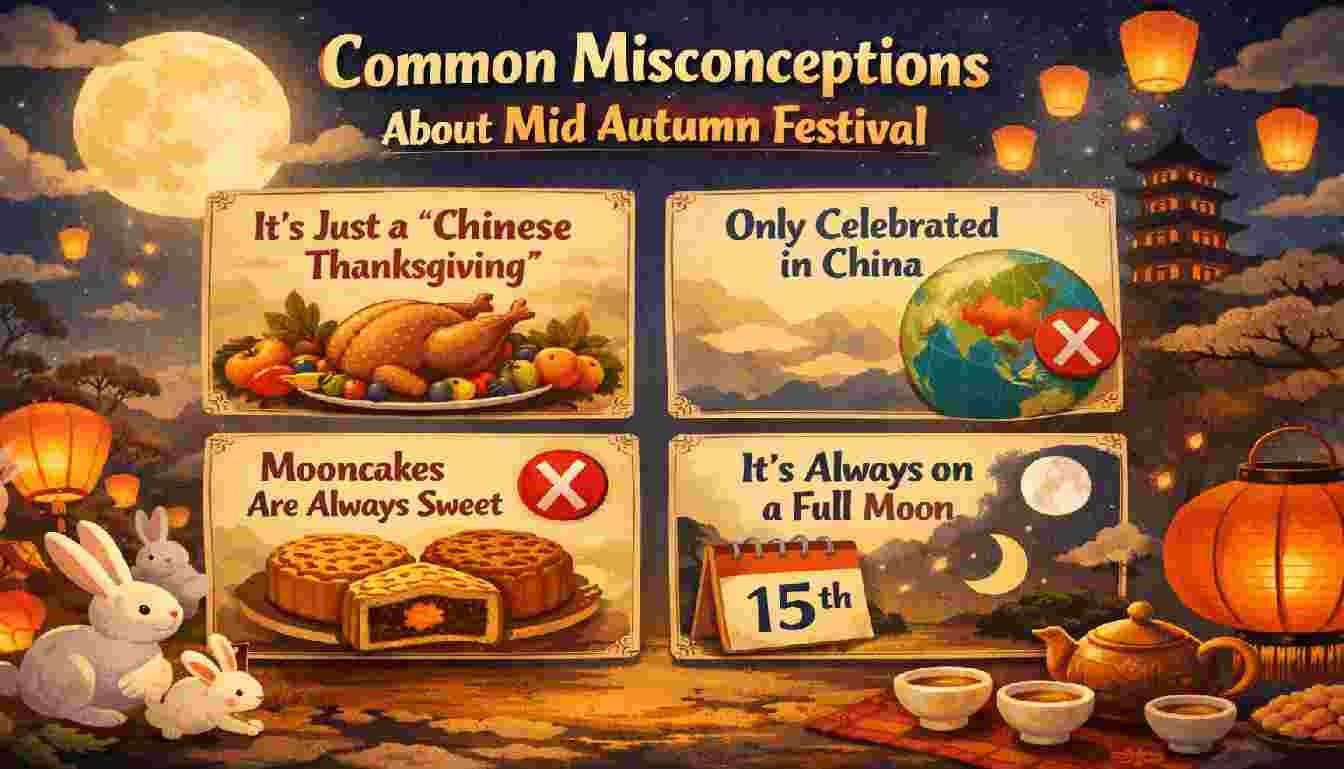
Some believe it is only about mooncakes. In reality, food is just one element.Others think it is limited to one country, but it is celebrated widely across Asia and among global communities. It is not just a public holiday — it is a deeply emotional and cultural tradition centered around reunion.
The Emotional Beauty of the Full Moon
There is something calming about looking at a full moon. During Mid Autumn Festival 2026, families will gather outdoors, sharing quiet conversations under the sky.
The moon becomes a shared experience — visible from different parts of the world at the same time. That shared gaze connects people beyond borders. It is this emotional simplicity that keeps the tradition alive.
FAQs
Q1: When is Mid Autumn Festival 2026?
Ans: Mid Autumn Festival 2026 will be celebrated on September 25, 2026, based on the lunar calendar.
Q2: Why is the moon important during the festival?
Ans: The full moon symbolizes reunion, harmony, and completeness, making it central to the festival’s meaning.
Q3: What are mooncakes made of?
Ans: Traditional mooncakes are filled with lotus seed paste or red bean paste and may include salted egg yolk, though modern versions offer many flavors.
Q4: Is Mid Autumn Festival a public holiday?
Ans: In some countries it is a public holiday, while in others it is mainly observed as a cultural celebration.
Q5: Can people outside Asia celebrate Mid Autumn Festival?
Ans: Yes, anyone can celebrate by gathering with family, sharing mooncakes, and appreciating the full moon.
Q6: What do lanterns symbolize?
Ans: Lanterns represent hope, brightness, and good fortune.
Q7: How long has Mid Autumn Festival been celebrated?
Ans: The festival has been celebrated for over 3,000 years, originating as a harvest celebration.
Q8: What fruits are commonly offered during the festival?
Ans: Pomelos, grapes, apples, and pears are commonly displayed because they symbolize blessings and abundance.